



Zoo Negara is Malaysia’s national zoo and one of the most established zoological parks in Southeast Asia. Located about 13 kilometres northeast of Kuala Lumpur’s city centre, near the town of Ulu Klang, the zoo covers approximately 110 acres of landscaped land that combines natural forest with purpose-built enclosures. Opened in 1963, it has grown into a major attraction for both domestic and international visitors, offering a comprehensive introduction to Malaysia’s wildlife as well as species from other continents.
The Malaysian Zoological Society, a non-governmental organisation, manages the zoo. Its development has relied heavily on public support, sponsorships, and conservation partnerships. For tourists, Zoo Negara serves not only as a recreational destination but also as an educational facility that highlights biodiversity, conservation, and animal care practices.
Location and Accessibility
Zoo Negara is situated along Jalan Ulu Klang, making it relatively accessible from central Kuala Lumpur. By car, the journey typically takes between 20~30 minutes, depending on traffic conditions. Visitors using the Middle Ring Road 2 (MRR2) or Jalan Ampang will find clear signage leading to the zoo entrance.
Public transport options are available, although they may require a transfer. The nearest rail station is Wangsa Maju on the Light Rail Transit (LRT) line. From there, taxis or ride-hailing services such as Grab are commonly used to complete the final 5-kilometre stretch. Some bus services also stop near the zoo, but schedules can be less predictable, so checking local timetables in advance is advisable.
For tourists staying in Kuala Lumpur’s main hotel districts, guided tours or private transport arrangements are often the most convenient options, especially for families or groups.
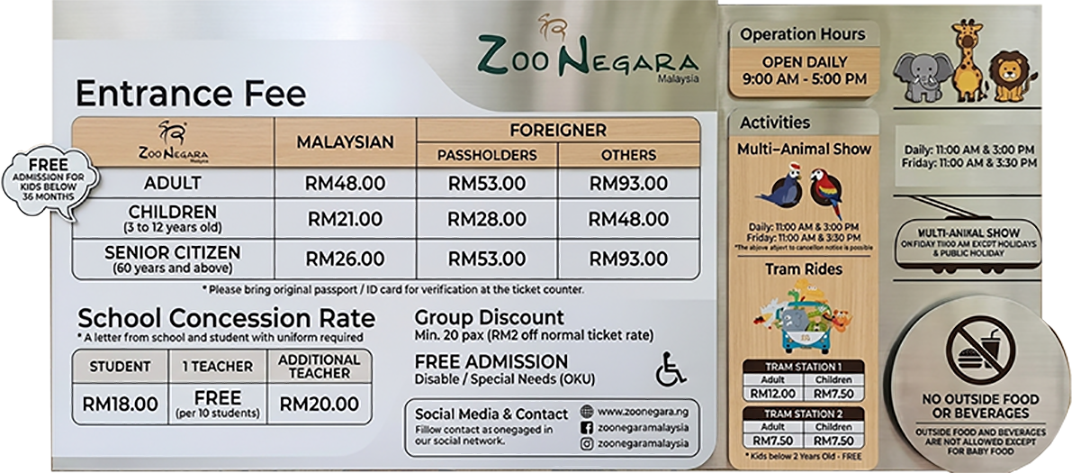
Operating Hours and Admission (as of April 2026)
Layout and Walking Experience
The zoo is designed as an open-concept facility, meaning many enclosures use natural barriers, such as moats and vegetation, instead of cages. This approach provides a more immersive experience and allows animals to be viewed in environments that resemble their natural habitats.
Exploring Zoo Negara on foot can take between three and five hours, depending on pace and interest level. The pathways are generally well-maintained, though some areas involve gentle slopes. Comfortable walking shoes are recommended due to the park’s size and tropical climate.
For those who prefer not to walk long distances, a paid tram service is available. The tram follows a fixed route with designated stops, allowing visitors to hop on and off at key sections of the zoo. This option is particularly useful for elderly visitors or families with young children.
Major Animal Exhibits
Zoo Negara houses over 5,000 animals representing more than 400 species. The collection includes mammals, birds, reptiles, amphibians, and fish, with a strong emphasis on Southeast Asian wildlife.
Giant Panda Conservation Centre
One of the zoo’s most prominent attractions is the Giant Panda Conservation Centre, which houses giant pandas on loan from China. The pandas, named Xing Xing and Liang Liang, are kept in a climate-controlled facility designed to replicate the cooler environment of their natural habitat.
This exhibit has become a key highlight for visitors, though it often requires a separate ticket. Entry is usually timed, and queues can be longer during peak periods.
Malaysian Wildlife Section
The Malaysian section showcases native species such as the Malayan tiger, Asian elephant, sun bear, and tapir. These animals are of particular conservation importance, as many are endangered due to habitat loss and poaching.
Informational signage throughout the area provides context about each species, including habitat, diet, and conservation status. This section is especially relevant for tourists interested in understanding Malaysia’s natural heritage.
Reptile House and Amphibian Displays
The reptile house features a range of species, including snakes, crocodiles, and turtles. It is one of the older sections of the zoo, but remains a popular stop for visitors. Adjacent areas may include amphibian exhibits with frogs and other small species.
These indoor enclosures offer a break from the heat while still providing educational content.
Bird Aviary
The bird aviary is designed as a walk-through enclosure where visitors can observe birds in a semi-natural environment. Species range from local hornbills to exotic parrots. The aviary is shaded and landscaped, making it one of the more comfortable sections of the zoo during midday heat.
Animal Shows and Feeding Sessions
Zoo Negara schedules daily animal shows and feeding sessions, which are among the most engaging experiences for visitors. These typically include performances by sea lions, birds, and occasionally other trained animals.
Showtimes are fixed and announced at the entrance and on-site notice boards. Arriving early for these sessions is recommended, as seating can fill quickly. These presentations combine entertainment with educational messages about animal behaviour and conservation.
Feeding sessions for certain animals may also be available at specific times. These provide closer opportunities for interaction, although they are usually supervised and limited to ensure animal welfare.
Facilities and Visitor Amenities
Zoo Negara is equipped with basic facilities to support a full-day visit. These include restrooms, prayer rooms, souvenir shops, and food outlets. The range of dining options is modest, typically offering local Malaysian dishes, snacks, and beverages.
Visitors may also bring their own food, though it should be consumed in designated areas. Littering is strictly discouraged, and waste bins are provided throughout the park.
Shaded rest areas and benches are available, but due to the tropical climate, it is advisable to carry water, wear light clothing, and use sun protection such as hats and sunscreen.
Best Time to Visit
The best time to visit Zoo Negara is in the morning, shortly after opening. During this period, temperatures are cooler, and animals tend to be more active. Late afternoon visits can also be pleasant, though some exhibits may begin closing preparations.
Kuala Lumpur’s climate is hot and humid year-round, with occasional rain showers. Bringing a compact umbrella or raincoat can be useful, especially during the monsoon season.
Weekdays are generally less crowded compared to weekends and public holidays. School holiday periods in Malaysia can see significantly higher visitor numbers.
Educational and Conservation Role
Zoo Negara plays an active role in conservation and education. It participates in breeding programmes for endangered species and collaborates with international organisations on wildlife preservation initiatives.
Educational programmes are offered to school groups and visitors, focusing on biodiversity, environmental protection, and animal welfare. Interpretive signage and guided tours help communicate these messages effectively.
For tourists, this aspect adds depth to the visit, transforming it from a simple leisure activity into a more informative experience.
Practical Tips for Visitors
Planning can significantly improve the overall experience at Zoo Negara. Given the size of the park, allocating at least half a day is recommended. Visitors with a strong interest in wildlife or photography may prefer to spend a full day.
Carrying a printed or digital map can help in navigating the zoo efficiently. Starting from one end and moving systematically through the sections reduces the likelihood of missing key exhibits.
Hydration is important due to the climate, so bringing a refillable water bottle is advisable. Footwear should be comfortable and suitable for extended walking.
For photography enthusiasts, early morning offers the best lighting conditions and more active animal behaviour. However, some enclosures use glass barriers, which may require careful positioning to avoid reflections.
Nearby Attractions
Zoo Negara is located within a reasonable distance of several other attractions in the Kuala Lumpur area. Visitors may combine their trip with nearby sites such as the National Zoo of Malaysia surroundings, local shopping areas, or natural attractions in the Ampang and Ulu Klang regions.
However, because thoroughly exploring the zoo takes time, it is often more practical to dedicate an entire day to this single destination.
Summary of Visitor Experience
Zoo Negara offers a balanced mix of recreation, education, and conservation awareness. Its open-concept design, diverse animal collection, and accessible location make it suitable for a wide range of visitors, including families, students, and international tourists.
While it may not match the scale of some of the world’s largest zoological parks, it provides a meaningful introduction to Malaysia’s wildlife and regional biodiversity. With proper planning, visitors can expect a structured yet flexible experience that accommodates both casual sightseeing and deeper exploration.
Contact Lawrence Blue, a licensed Malaysian tour guide, to bring you to places of interest in Kuala Lumpur.
