



The eagle-feeding cruise in Kuala Selangor is one of the most distinctive river-based wildlife experiences in Malaysia. It takes place along the lower reaches of the Selangor River, where extensive mangrove forests support a rich ecosystem of birds, fish, mudskippers, and other estuarine species. The main attraction of the cruise is the close-up observation of raptors, particularly the white-bellied sea eagle, feeding in their natural habitat.
The activity is typically conducted using small motorised boats operated by local guides. Most departures take place from jetty points near Kuala Selangor town, often in the late afternoon when tidal conditions are suitable, and bird activity increases. The cruise is usually combined with a broader river tour that may include firefly watching after dusk, but the eagle-feeding segment is conducted before sunset.
The Selangor River and Mangrove Environment
The Selangor River estuary is a brackish-water system influenced by tidal movement from the Strait of Malacca. The riverbanks are lined with mangrove species such as Rhizophora and Avicennia, which stabilise the shoreline and provide habitat for fish nurseries and crustaceans. These ecological conditions are important because they support the food chain that attracts raptors.
The mangrove ecosystem is also home to monitor lizards, mudskippers, kingfishers, herons, and macaques. The abundance of small fish and exposed tidal flats makes the river a reliable hunting ground for large birds of prey. Human settlements along the river have also contributed indirectly to eagle feeding behaviour, as fish offal from fishing activities becomes part of their food supply.
Overview of the Eagle-Feeding Cruise Experience
Boat schedule by Sky Mirror Tour & Travel Sdn Bhd - 5.00 pm / 6.00 pm / 6.30 pm
The eagle-feeding segment usually lasts 30 to 40 minutes, depending on river conditions and tour arrangements. Boats move slowly along designated stretches of the river where eagles are known to gather. Guides communicate with other boats and coordinate feeding activities to attract the birds to specific locations.
Chicken skins are typically thrown into the water to encourage eagles to swoop down. This creates opportunities for observation and photography, as the birds descend rapidly, often skimming the water surface before grabbing food with their talons. The experience is designed to be safe and controlled, ensuring that boats maintain a respectful distance from the birds.
Visitors often combine this cruise with other attractions in Kuala Selangor, such as Bukit Melawati, firefly cruises, and nearby fishing villages. The timing is important because eagle feeding is most active in late afternoon when thermal air currents assist the birds in gliding and hunting.
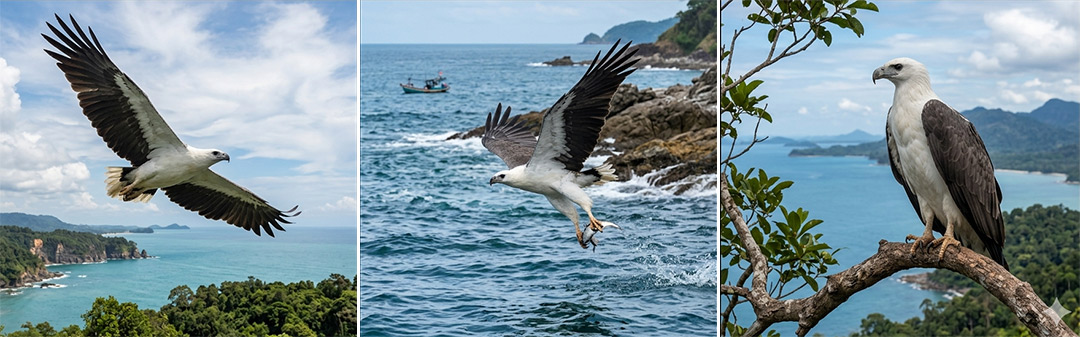
White-Bellied Sea Eagle: Key Characteristics
The white-bellied sea eagle (Haliaeetus leucogaster) is the primary species seen during the cruise. It is one of the largest birds of prey in Southeast Asia and is widely distributed across coastal regions from India and Sri Lanka to Australia.
Physical Features
Adult white-bellied sea eagles typically have a wingspan ranging from 1.8 to 2.2 metres. Their plumage is distinctive: the head, chest, and underparts are white, while the wings and back are greyish-brown. The contrast makes them easy to identify even at a distance. Juveniles, however, are browner overall and gradually develop the characteristic white underbody as they mature.
Their beak is strong, hooked, and yellow, designed for tearing flesh. The legs and feet are also yellow and equipped with sharp talons used for gripping slippery prey such as fish.
Habitat and Distribution
This species is closely associated with coastal environments, large rivers, estuaries, and mangrove forests. It prefers areas with minimal disturbance and abundant food supply. In Malaysia, it is commonly found along the west coast of the peninsular region, including the coastal waters of Selangor, Perak, and Johor.
In Kuala Selangor, the combination of mangroves and fishing activity creates an ideal feeding ground. The relatively calm waters and open river channels allow the birds to hunt efficiently and also respond quickly to food sources introduced during cruises.
Diet and Feeding Behaviour
The white-bellied sea eagle is a carnivorous predator whose diet primarily consists of fish. It also feeds on small birds, reptiles, and carrion when available. In natural conditions, it hunts by soaring above the water and diving down to snatch fish near the surface.
During the Kuala Selangor eagle-feeding cruise, the birds exhibit opportunistic feeding behaviour. They quickly respond to fish that tour operators throw into the river. Their hunting strategy involves hovering or circling above the water before diving at high speed. The talons are used to grasp prey, and the eagle often carries the fish to a nearby perch before consuming it.
They are highly adapted for fishing, with sharp vision that allows them to detect movement in water from considerable heights. Their hunting efficiency is influenced by tidal flow, water clarity, and the availability of exposed feeding areas.
Behaviour and Social Structure
White-bellied sea eagles are generally monogamous and often pair for life. They are territorial birds and maintain nesting sites in tall trees or coastal cliffs. In the Kuala Selangor region, mangrove trees serve as nesting and resting sites.
Although they are solitary hunters, multiple individuals may gather in areas with abundant food, especially during feeding activities organised by tour operators. Communication between birds includes calls and aerial displays, particularly during territorial disputes.
Ecological and Conservation Aspects
The presence of white-bellied sea eagles in Kuala Selangor reflects the ecological health of the mangrove ecosystem. As apex predators, they play a role in maintaining balance within the food chain. Their reliance on fish populations also makes them sensitive to environmental changes such as water pollution and habitat destruction.
Mangrove conservation in the Selangor River area is important for sustaining its population. These forests provide nesting sites and protect the shoreline from erosion. Human activity, including fishing and tourism, has both positive and negative impacts. While controlled tourism, such as eagle-feeding cruises, can raise awareness of conservation, excessive disturbance or pollution can affect bird behaviour.
Local authorities and tour operators generally regulate feeding activities to prevent overfeeding or unnatural dependency. The goal is to attract the birds without disrupting their natural hunting instincts.
Timing and Best Conditions for the Cruise
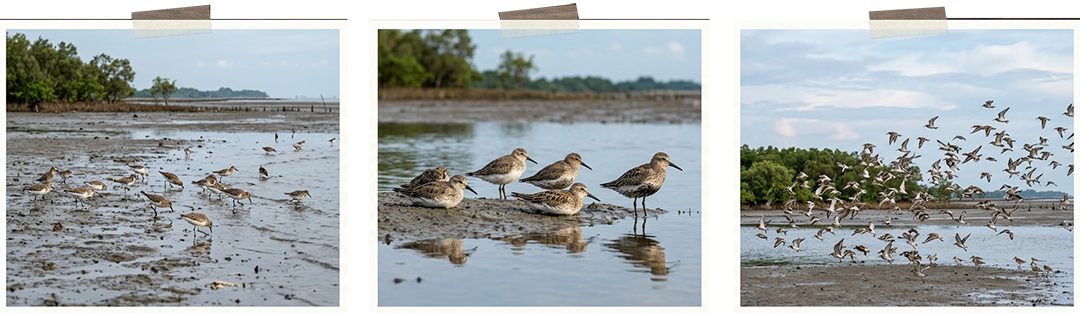
The most suitable time for the eagle-feeding cruise is late afternoon, typically between 4:30 pm and 6:30 pm. Although the eagle-feeding cruises are available every day, the best time to visit the place is when the migrant birds, especially the Sandpipers, are around.
|
In Kuala Selangor, sandpiper species are among the most noticeable migratory shorebirds that arrive each year along the mudflats and estuarine zones of the Selangor River. They are small, fast-moving waders that forage in large groups during low or falling tide, probing the wet mud for worms, small crustaceans, and other invertebrates exposed on the tidal flats. Common species recorded in the area include the common sandpiper, marsh sandpiper, greenshank, and occasionally other migratory sandpipers passing through the East Asian–Australasian Flyway. These birds typically travel long distances from breeding grounds in northern Asia and Siberia to wintering areas in Southeast Asia and Australia, using coastal wetlands like Kuala Selangor as feeding and resting stopovers during migration. The best time to observe sandpipers in Kuala Selangor is during the northern winter migration period, generally from September to March. During these months, the mudflats and shallow waters become active feeding grounds. Within each day, timing is equally important: sandpipers are most visible during low tide or the outgoing tide, when mudflats are exposed, and food is accessible. At high tide, many birds move to distant roosting sites and become less visible. Early morning and late afternoon sessions are often preferred because light conditions are better for viewing and photography, and bird activity tends to be higher. Overcast days can also be favourable, as birds may feed for longer periods without strong heat stress. In Kuala Selangor’s coastal environment, sandpipers are often seen with other waders, such as plovers, redshanks, and curlews, forming mixed feeding flocks that move rhythmically across the mudflats. Their presence is a seasonal indicator of the global migration cycle that connects Arctic breeding grounds with tropical wintering habitats. |
Tide conditions play a significant role. Incoming or outgoing tides can affect fish movement and bird activity. Calm weather and clear skies improve visibility and overall experience.
Boat rides are usually smooth but can vary depending on river currents. Visitors are advised to remain seated during feeding activities as eagles may approach the water surface quickly.
What Visitors Can Expect on Board
The boats used for the cruise are typically wooden or fibre vessels equipped with basic seating. Safety equipment, such as life jackets, is provided. Guides on board explain bird behaviour, river ecology, and local geography.
During the eagle-feeding segment, the boat slows down or stops at designated points. Fish scraps are then released into the water, and eagles may appear within minutes. The experience is often quiet, allowing visitors to observe natural behaviour without excessive noise.
Photography is a major component of the activity. Fast shutter speeds are recommended to capture the rapid motion of diving eagles. Telephoto lenses are commonly used due to the distance between boats and birds.
Environmental Observations Along the Cruise
Beyond eagles, the cruise offers insight into mangrove biodiversity. Mudskippers can often be seen moving across exposed mudflats. Fiddler crabs emerge from burrows during low tide, while herons and egrets forage in shallow waters.
Occasionally, monitor lizards are observed along riverbanks. The mangrove canopy also supports insects and smaller bird species, contributing to the area’s ecological complexity.
The interplay between freshwater and seawater in the estuary creates a nutrient-rich environment that supports this diverse wildlife system.
Safety and Responsible Tourism Considerations
Visitors are advised to follow the safety instructions provided by guides. This includes remaining seated during feeding activities, avoiding sudden movements, and not attempting to feed wildlife independently.
Responsible tourism practices are important to ensure that the eagle population remains healthy and that natural hunting behaviours are preserved. Over-reliance on human-provided food can alter feeding patterns, so feeding activities are typically controlled and limited.
Waste management on boats is also enforced to prevent pollution of the river system. The long-term sustainability of the cruise depends on maintaining ecological balance within the mangrove environment.
Contact Lawrence Blue, a licensed Malaysian tour guide, to bring you to places of interest in Kuala Lumpur.



