



Located in the historic core of George Town, Pinang Peranakan Mansion stands as one of the most complete and immersive showcases of Peranakan heritage in Southeast Asia. This beautifully restored mansion offers visitors a vivid insight into a unique culture shaped by centuries of migration, adaptation, and refinement.
Understanding the Peranakan: Baba, Nyonya, and the Straits Chinese
The term “Peranakan” refers to the descendants of early Chinese settlers who migrated to the Malay Archipelago—particularly to places like Penang, Malacca, and Singapore—from as early as the 15th century. Over generations, these settlers intermarried with local Malay communities, creating a distinct hybrid culture.
Within this community, men are traditionally referred to as “Baba,” while women are known as “Nyonya.” Together, they are often referred to as the Baba-Nyonya community. Another commonly used term is “Straits Chinese,” referring specifically to Peranakans who settled in the British Straits Settlements.
What distinguishes the Peranakan is not just ancestry, but a fully developed cultural identity. They retained many elements of Chinese traditions—such as ancestor worship and clan associations—while adopting aspects of the Malay language, cuisine, dress, and customs. The resulting culture is refined, highly aesthetic, and deeply rooted in both heritage streams.
Peranakan Innovations and Cultural Specialties
The Peranakan community is widely admired for its craftsmanship, culinary sophistication, and distinctive fashion.
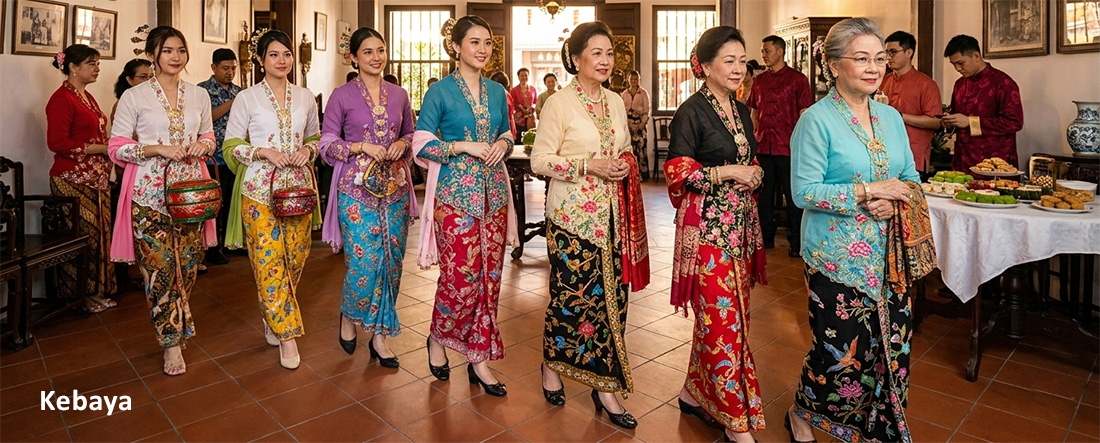
One of the most recognizable elements is the Kebaya, a traditional outfit worn by Nyonya women. Unlike the looser Malay kebaya, the Nyonya version is intricately tailored and often made from fine lace or voile, paired with a batik sarong. It is usually fastened with a set of ornate brooches known as “kerongsang.”
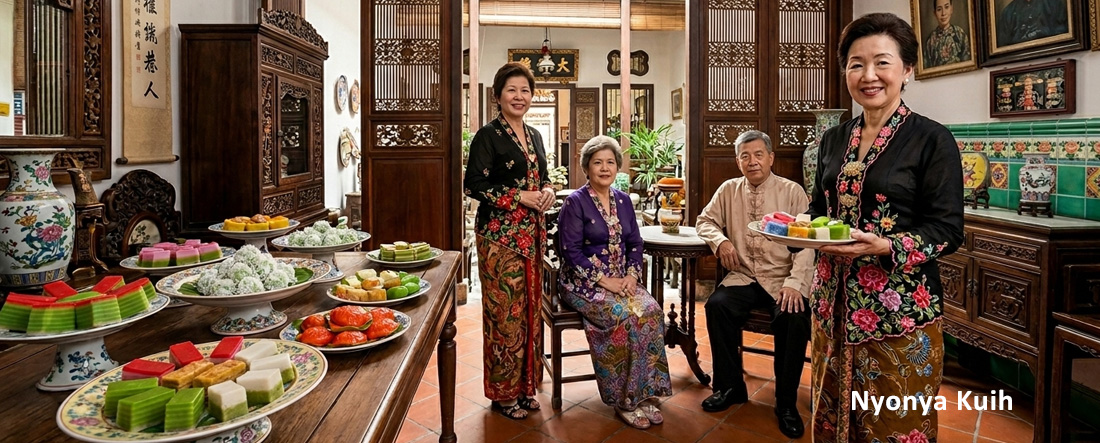
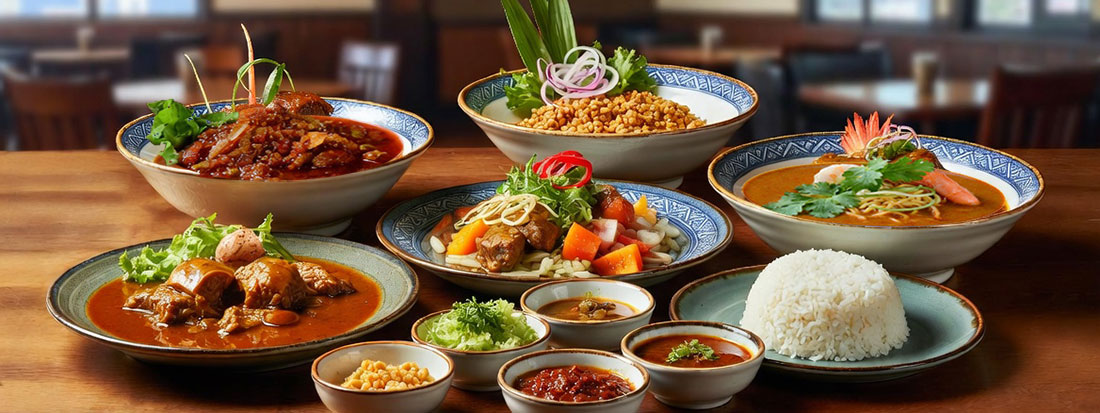
Equally renowned is Nyonya cuisine, which represents a masterful fusion of Chinese ingredients and Malay spices. Dishes such as ayam pongteh, laksa, and otak-otak are known for their complex flavors, often balancing sweet, sour, spicy, and savory elements. Complementing these dishes are Nyonya kuih—colorful bite-sized desserts made from rice flour, coconut milk, pandan leaves, and palm sugar. These kuih are not only delicious but also visually striking, reflecting the Peranakan emphasis on aesthetics.
In addition, Peranakan artisans were highly skilled in goldsmithing and silversmithing. Jewelry pieces, often worn during weddings and special occasions, feature intricate designs with symbolic meanings. Beaded slippers (kasut manek) are another hallmark, painstakingly handcrafted using tiny glass beads to form detailed patterns.
Chung Keng Kwee: The Visionary Founder
The mansion is closely associated with Chung Keng Kwee, a prominent 19th-century Chinese leader in Penang.
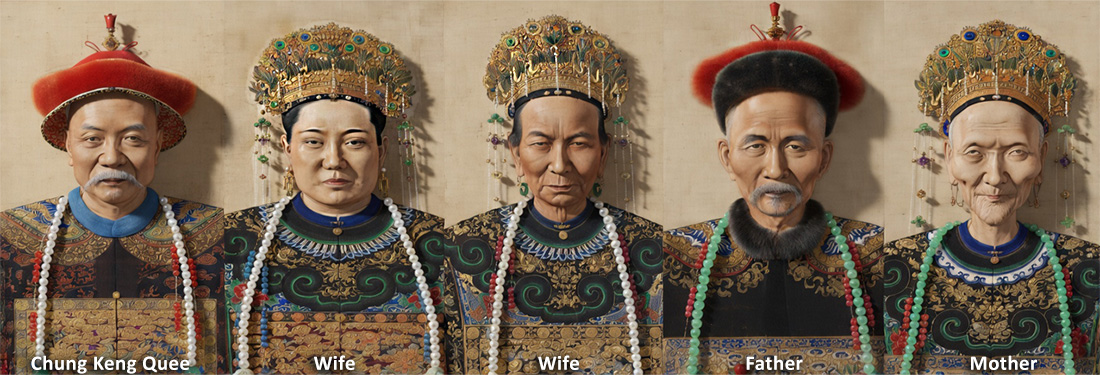
Chung Keng Quee (1827–1901) was a key pioneer in the development of Taiping and the wider state of Perak. Appointed Kapitan China by the British in 1877, he became a highly influential leader respected by both the Chinese community and European administrators. Born into a Hakka peasant family in Guangdong, he migrated to Malaya around 1841. He joined his family in the tin-mining industry, which later became the basis of his wealth and power.
His rise was closely linked to his leadership of the Hai San Secret Society, through which he gained control of the Larut tin fields by 1860. He played an important role during the Larut Wars, navigating a turbulent period of conflict between rival groups. Beyond mining, he expanded into farming, pawnbroking, and logging, and was known for his innovative contributions to the tin industry.
Chung also held significant political roles, serving on the Commission for the Pacification of Larut and the Perak State Advisory Council alongside figures such as Hugh Low. His combined efforts in business, leadership, and governance were instrumental in shaping the early prosperity and stability of Perak, establishing him as one of the region’s most important historical figures.
Chung Keng Quee maintained a large family with several wives and concubines, a pattern typical of affluent Chinese leaders of his time.
The Mansion: Architecture and Historical Context
Built at the end of the 19th century, the mansion is an example of Peranakan architecture. It combines Chinese carved wood panels, European floor tiles, Scottish ironwork, and local craftsmanship into a cohesive, luxurious whole.
The layout follows traditional Chinese courtyard design, with open-air spaces that allow natural light and ventilation. Ornate screens, gilded carvings, and imported materials reflect the wealth and global connections of the Peranakan elite.
The mansion was designed not only as a home but also as a statement of status. Every detail—from the furniture to the ceramics—was carefully chosen to reflect sophistication and cultural pride.
The Ancestral Hall
The ancestral hall of Pinang Peranakan Mansion represents the spiritual and cultural heart of this historic residence, reflecting the deep-rooted traditions of the Peranakan Chinese community. The mansion is not merely a display of wealth and architectural elegance, but also a testament to filial piety and ancestral reverence—core values in Chinese culture.
At the center of the ancestral hall stands the altar, where ancestral tablets are carefully arranged and honored. These tablets symbolize the presence of past generations, serving as a spiritual link between the living and the deceased. Offerings such as incense, fruits, and symbolic paper items are traditionally presented here, especially during important festivals and family occasions. The act of paying respects in this space reinforces a sense of continuity, identity, and gratitude toward one’s lineage.
Architecturally, the hall is designed with symmetry and hierarchy, reflecting Confucian ideals. The layout emphasizes order and respect, with the main altar positioned prominently to command attention and reverence. Intricate wood carvings, gilded decorations, and auspicious motifs—such as dragons, phoenixes, and floral patterns—adorn the space, each carrying symbolic meanings of prosperity, harmony, and longevity. The use of rich materials and craftsmanship also demonstrates the social standing and refined taste of its original owner.

The Current Owner: Preservation Through Passion
Today, the mansion is owned and curated by Peter Soon, a Penang-born collector and cultural advocate. His passion for Peranakan heritage led him to acquire and restore the property, transforming it into a museum.
Peter Soon has dedicated decades to collecting authentic Peranakan artifacts, many of which are now displayed within the mansion. His efforts have been instrumental in preserving a culture that might otherwise have faded amid modernization.
Restoration and Renovation
When Peter Soon acquired the mansion, it required extensive restoration. The process involved meticulous research to ensure historical accuracy, from paint colors to architectural details.
Traditional materials and techniques were used wherever possible. Skilled artisans were engaged to restore wood carvings, tiles, and metalwork. The result is a space that not only looks authentic but also conveys the atmosphere of a lived-in Peranakan home.
The restoration has been widely praised for its attention to detail and commitment to cultural preservation.
Collections and Galleries
The mansion houses over a thousand artifacts, making it one of the most comprehensive Peranakan collections in the region. Visitors can explore galleries featuring furniture, porcelain, textiles, jewelry, and ceremonial items.
Highlights include elaborately carved wedding beds, antique dining sets, and rare porcelain pieces known as “Nyonya ware.” These items were often custom-made and feature vibrant colors and intricate motifs.
There are also exhibits dedicated to traditional weddings, showcasing costumes, accessories, and rituals. The galleries are arranged thematically, allowing visitors to understand different aspects of Peranakan life—from daily routines to major life events.
Visiting Information: Hours, Tickets, and Experiences
The Pinang Peranakan Mansion is open daily, typically from 9:30 AM to 5:00 PM, including weekends and public holidays. Guided tours are often available and are highly recommended, as they provide deeper insights into the exhibits and cultural context.
Entrance fees are modest and vary depending on nationality and age group. Discounts are usually available for children and students. As pricing may change, visitors are advised to check the latest information before visiting. The current prices (as of April 2026) are:
| Adults | RM30.00 |
| Children (6–12 yrs) | RM18.00 |
| Junior Children (below 6) | Free |
| Complimentary tours are available. | |
One of the most popular experiences offered is the rental of Kebaya costumes for photography sessions. Visitors can dress in traditional Nyonya attire and take photos within the mansion’s elegant interiors, creating a memorable and immersive cultural experience. This activity has become especially popular among tourists and photography enthusiasts.
Conclusion
The Pinang Peranakan Mansion is more than a museum—it is a living narrative of the Peranakan world. Through its architecture, collections, and storytelling, it captures the essence of a culture defined by adaptation, artistry, and identity.
From the origins of the Baba-Nyonya community to the refined elegance of their crafts and cuisine, the mansion offers a comprehensive journey into a unique cultural heritage. Thanks to Peter Soon’s dedication, this legacy continues to be preserved and shared with future generations.


