



Penang Hill, one of Malaysia’s most iconic highland destinations, offers a refreshing escape from the tropical heat while showcasing a rich blend of history, engineering, biodiversity, and scenic beauty. Rising above George Town on Penang Island, it has long been a place of retreat, exploration, and natural wonder.
A Historical Retreat Above the Tropics
The history of Penang Hill dates back to the late 18th century, shortly after Captain Francis Light established the British settlement in Penang in 1786. Recognizing the cooler climate at higher elevations, British officials began developing the hill as a sanatorium and retreat to escape the coastal heat and diseases. Early access was difficult, requiring steep and often dangerous jungle paths. Despite these challenges, colonial bungalows, government residences, and small farming plots gradually emerged. By the 19th century, Penang Hill had become a well-established hill station, similar in concept to those in India.
The Funicular Railway: Engineering Through the Ages
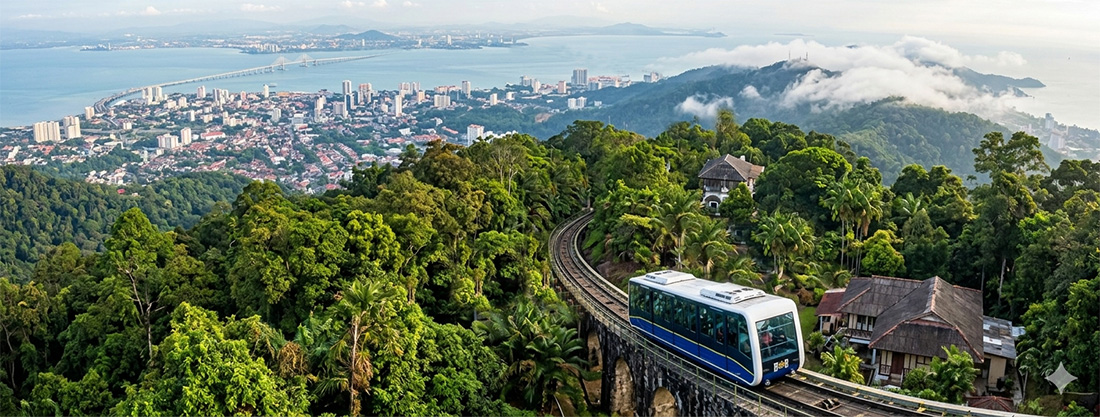
One of the defining features of Penang Hill is its funicular railway, which revolutionized access to the summit. The original system, completed in 1923, was one of the earliest funicular railways in Southeast Asia. It operated using a counterbalanced system with two carriages moving in opposite directions on a steep incline.
Initially powered by steam and later upgraded to electric systems, the railway underwent several improvements over the decades. However, increasing visitor numbers eventually outpaced its capacity. In 2010, a modernized funicular system was introduced, significantly reducing travel time to approximately five minutes and increasing passenger capacity. Today, it remains both a practical transport system and a unique attraction, offering panoramic views as it ascends through dense rainforest.
Operating Hours and Ticketing
The Penang Hill funicular operates daily, typically from 6:30 AM to 11:00 PM, though hours may be extended during peak seasons or special events. The frequency of trains varies depending on demand, with shorter intervals during busy periods.
Ticket prices are structured to accommodate both residents and international visitors. Malaysian citizens enjoy subsidized rates, while foreign tourists pay a higher standard fare. Fast lane tickets are also available at a premium, allowing visitors to skip long queues—particularly useful during weekends and holidays. Discounts are offered for children, senior citizens, and persons with disabilities. It is advisable to check official channels for the most current pricing, as adjustments may occur periodically.
Current Management and Development
Penang Hill is managed by the Penang Hill Corporation (PHC), a state government agency responsible for maintaining, developing, and promoting the hill. Their approach emphasizes sustainable tourism, balancing visitor experience with environmental conservation.
In recent years, PHC has introduced improved facilities, enhanced safety measures, and better crowd management systems. Digital ticketing, upgraded infrastructure, and curated visitor experiences reflect a modern approach while preserving the hill’s heritage. The management also collaborates with environmental and research organizations to ensure long-term sustainability.
Commitment to Nature Protection
A significant portion of Penang Hill is designated as a protected forest reserve, forming part of one of the oldest rainforest ecosystems in the region. Conservation efforts focus on preserving biodiversity, preventing deforestation, and maintaining ecological balance.
Strict regulations limit development, and eco-friendly practices are encouraged among visitors and operators. Initiatives such as guided nature walks, educational programs, and conservation campaigns help raise awareness about the importance of protecting this fragile environment. The hill also plays a role in water catchment, supporting Penang’s water supply system.
Wildlife: A Living Rainforest Habitat
Penang Hill is home to a remarkable diversity of wildlife, making it a haven for nature enthusiasts and photographers. Among its most notable inhabitants is the Black Giant Squirrel, one of the largest squirrel species in the world, easily recognizable by its dark fur and impressive size.
The Dusky Leaf Monkey, also known as the spectacled langur, is another highlight. These gentle primates are often seen moving gracefully through the trees, their expressive eyes and social behavior captivating visitors.
Birdwatchers are particularly drawn to species such as the Racket-tailed Blue Drongo, known for its striking appearance and distinctive tail feathers. The hill also hosts a wide range of other birds, insects, reptiles, and small mammals, all contributing to a vibrant and dynamic ecosystem.
Attractions on Penang Hill
Beyond its natural beauty, Penang Hill offers a variety of attractions that cater to different interests. The Habitat Penang Hill is a major highlight, featuring a canopy walk, nature trails, and educational exhibits that provide insight into the rainforest ecosystem.
Visitors can also explore historic colonial bungalows, such as The David Brown’s Restaurant and Tea Terraces, which combine heritage architecture with modern dining experiences. The Penang Hill Mosque and Sri Aruloli Thirumurugan Temple reflect the island’s cultural diversity. At the same time, the Curtis Crest Tree Top Walk offers breathtaking 360-degree views from one of the highest accessible points on the hill.
For those interested in history, the Bellevue Hotel and various old structures provide glimpses into the colonial past. There are also food courts and small cafés serving local Malaysian cuisine, allowing visitors to enjoy both the scenery and the flavors of Penang.
Geography and Climate
Geographically, Penang Hill is not a single peak but a collection of hills, with Bukit Laksamana (Flagstaff Hill) being the most prominent. The highest point reaches approximately 833 meters above sea level. Its elevated position results in a cooler climate, often several degrees lower than that of coastal areas, with temperatures typically ranging from 20°C to 25°C.
Steep slopes, dense tropical rainforest, and a network of walking trails characterize the hill’s terrain. Its strategic location provides sweeping views of George Town, the Penang Bridge, and even the mainland on clear days.
Animals
Perched above George Town, Penang Hill is far more than a cool escape from the lowland heat—it is a living rainforest system where native wildlife continues to thrive. Among its most engaging inhabitants are three species that illustrate the hill’s ecological complexity: the dusky leaf monkey, the black giant squirrel, and the greater racket-tailed drongo. Each occupies a distinct niche, contributing to the balance of this forest while offering visitors rewarding glimpses into Penang’s natural heritage.
A Living Rainforest Experience
Together, these three species illustrate the ecological richness of Penang Hill. From the gentle, leaf-eating primates to the agile canopy squirrels and the intelligent, vocal birds, each contributes to the balance of this rainforest ecosystem.
For visitors, encountering these animals in their natural habitat offers more than just a sightseeing experience—it provides a deeper appreciation of Penang’s biodiversity and the importance of preserving it. Early mornings and late afternoons are often the best times for wildlife observation, when the forest is alive with movement and sound.
As development continues across much of Southeast Asia, places like Penang Hill remain vital refuges for wildlife. Protecting these habitats ensures that future generations will continue to witness the quiet grace of the dusky leaf monkey, the acrobatics of the black giant squirrel, and the captivating calls of the racket-tailed drongo.
Monkey Cup Cafe
The Monkey Cup Cafe, also known as Kopi Hutan, is a small café on Penang Hill with a nature setting near the summit. It is known for its cool hilltop climate, peaceful surroundings, and the greenery around it, including pitcher plants in the nearby garden area.
The café serves simple refreshments, including coffee, tea, chocolate drinks, and light snacks. It is better suited to resting and enjoying the scenery than to a full meal.
Visitors usually reach it by walking, taking a buggy, or coming from nearby attractions on Penang Hill.
Buggy Ride
Getting on a buggy at the top of Penang Hill is a popular way to explore the summit’s quieter, more scenic roads without having to hike them. The experience is essentially a localized chauffeur service designed to save you energy while showcasing the hill’s historic architecture and natural views.
Here is a breakdown of the typical buggy ride experience, based on availability in 2026.
The Route and What You’ll See
The most common buggy service operates on the relatively flat road at the summit, generally covering a 2-3km round trip.
Because of this specific route, the experience focuses on a different side of Penang Hill than you see at the crowded main square:
-
-
Colonial Bungalows: You will drive past numerous private bungalows dating back decades. Many of these display old English architecture, offering a glimpse into the hill’s history as a former British colonial hill station.
-
Scenic Lookout Points: Drivers often make special stops, such as at a small hut offering a stunning open view of George Town, the Penang Strait, and the mainland.
-
A “Tour” from the Driver: Many buggy drivers act as informal guides, telling stories or sharing the history of the attractions and bungalows along the way.
-
Lush Nature: The road is lined with the rainforest of the UNESCO Biosphere Reserve, making the ride breezy and relaxed.
-
Buggy Fee
There isn’t just one universal buggy company; they sometimes differ by operator or location:
-
-
Direct Round Trip: You hire the buggy from the main stand, it takes you on a tour loop, stops at viewpoints, and brings you back to the main funicular area. Maximum 5 visitors in a buggy at MYR40 per buggy, payable to the driver.
-
Stopping at Monkey Cup Cafe: If you take a break at the forest cafe, you will need to pay an additional MYR15 for another buggy for the return trip.
-


