



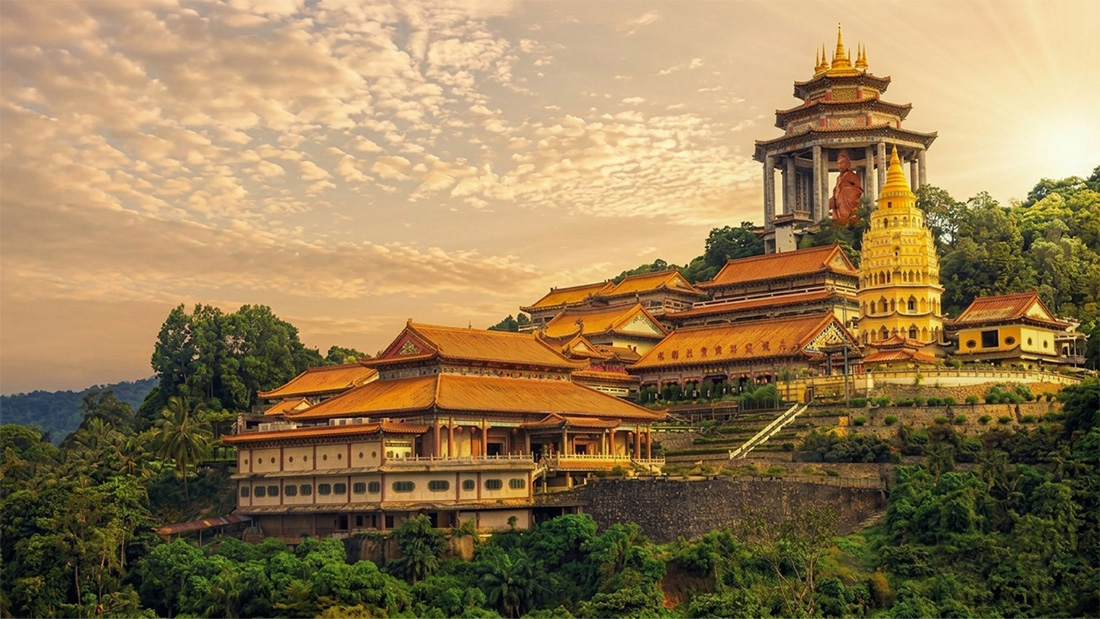
Perched on the hillside of Air Itam, Kek Lok Si Temple is the largest Buddhist temple in Malaysia and one of the most significant pilgrimage sites in Southeast Asia. Renowned for its architectural grandeur, cultural depth, and spiritual importance, the temple reflects a harmonious blend of religious traditions, historical influences, and community support.
A Vision Rooted in History
The origins of Kek Lok Si Temple date back to the late 19th century, when Penang was a thriving trading port under British colonial rule. Construction began in 1890 and continued in stages over several decades. The temple’s name, which translates to “Temple of Supreme Bliss,” reflects its aspiration to serve as a center for spiritual cultivation and enlightenment.
At the time, Penang had a large Chinese immigrant population, many of whom sought to establish places of worship that reflected their cultural and religious heritage. Kek Lok Si emerged as a unifying religious complex, bringing together different Chinese Buddhist traditions under one expansive compound.
The Founder: A Visionary Monk
The driving force behind the temple’s establishment was Beow Lean, a respected Buddhist monk originally from China. Known for his determination and leadership, Beow Lean envisioned a grand temple that would not only serve as a place of worship but also as a symbol of unity for the Chinese community in Penang.
He sought support from both local devotees and influential figures abroad. His connections extended to China, where he gained recognition and assistance from Qing dynasty officials, including imperial patronage. His efforts were instrumental in transforming Kek Lok Si from a modest shrine into a major religious landmark.
Funding the Construction
The construction of Kek Lok Si Temple was largely financed through donations from the Chinese community, both locally in Penang and internationally. Wealthy merchants, philanthropists, and ordinary devotees contributed funds over many years. Contributions also came from Chinese communities in Southeast Asia, reflecting the temple’s broader regional significance.
Notably, the temple received imperial support during the Qing dynasty. The Guangxu Emperor is said to have bestowed a tablet and recognition upon the temple, thereby elevating its status and encouraging further donations. This combination of grassroots contributions and elite patronage enabled the temple to expand continuously over decades.
The Pagoda of Ten Thousand Buddhas
One of the most iconic structures within the complex is the Ban Po Thar Pagoda, commonly known as the Pagoda of Ten Thousand Buddhas. Construction began in 1891 and was completed in 1930. This seven-tiered pagoda is remarkable for its unique architectural style, blending Chinese, Thai, and Burmese influences.
The base of the pagoda reflects Chinese octagonal design, the middle tiers incorporate Thai elements, and the crown resembles a Burmese stupa. This synthesis symbolizes the unity of Buddhist traditions across the region.
The pagoda was funded by a combination of donors, including local benefactors and international supporters. One of the key contributors was King Rama VI of Thailand, whose involvement influenced the Thai design elements. Numerous smaller donors also sponsored individual Buddha statues housed within the pagoda, contributing to its name and spiritual significance.
The Main Hall and Deities Worshipped
At the heart of Kek Lok Si Temple lies its main prayer hall, the central space for worship and religious ceremonies. This hall is richly decorated with intricate carvings, lanterns, and statues, creating a solemn yet vibrant atmosphere.
The principal deity worshipped here is the Buddha, particularly in the form of Sakyamuni, the historical founder of Buddhism. Alongside him, visitors will find statues of Bodhisattvas such as Avalokitesvara (Guanyin), the Goddess of Mercy, who holds special significance among Chinese Buddhists.
Other figures commonly enshrined include Ksitigarbha (Dizang Wang), associated with compassion for beings in the underworld, and Samantabhadra, symbolizing practice and virtue. The presence of multiple deities reflects the Mahayana Buddhist tradition, which emphasizes a broad pantheon of enlightened beings.
Current Management and Administration
Today, Kek Lok Si Temple is managed by a board of trustees, comprising senior monks and lay representatives from the local Buddhist community. The management is responsible for maintaining the temple, organizing religious activities, and overseeing development projects.
The temple operates as both a religious institution and a major tourist attraction. Management efforts focus on balancing these roles, ensuring that spiritual practices are preserved while accommodating large numbers of visitors. Revenue from donations, visitor contributions, and commercial activities within the temple grounds supports ongoing maintenance and charitable initiatives.
Geographical Setting
Kek Lok Si Temple is situated on the slopes of a hill in Air Itam, a suburb of George Town in Penang. Its elevated position provides commanding views of the surrounding town and, on clear days, parts of the island’s coastline.
The temple complex is built in tiers along the hillside, with winding paths, stairways, and roads connecting different sections. This layout not only maximizes space but also enhances the visitor experience, as each level reveals new perspectives and structures.
The tropical climate of Penang, combined with the temple’s lush surroundings, creates a serene environment conducive to reflection and relaxation. The hillside location also aligns with traditional Chinese geomancy (feng shui), which favors elevated and harmonious natural settings.
Religious Tradition and Buddhist Stream
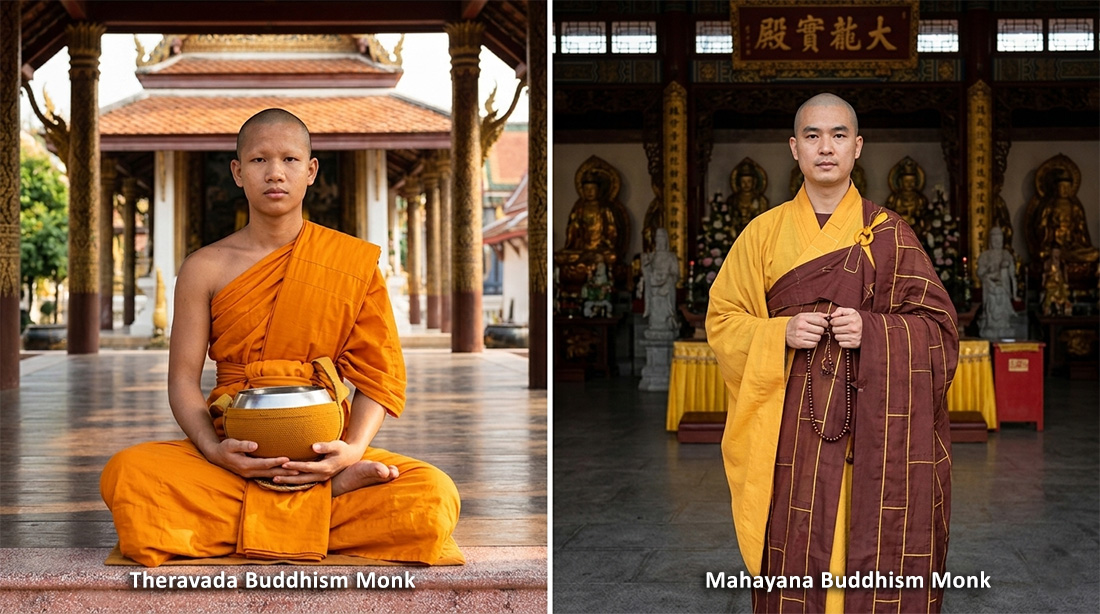
Kek Lok Si Temple primarily follows the Mahayana school of Buddhism, which is widely practiced among Chinese communities. Mahayana Buddhism emphasizes the role of Bodhisattvas—enlightened beings who choose to remain in the cycle of rebirth to help others achieve liberation.
However, the temple is also notable for its inclusivity and syncretism. Elements of Theravada Buddhism and Chinese folk religion are present throughout the complex. This is evident in the architectural diversity, the variety of deities worshipped, and the rituals performed.
Such integration reflects the broader religious landscape of Southeast Asia, where different traditions often coexist and influence one another. Kek Lok Si stands as a testament to this cultural and spiritual fusion.
|
Brief Differences between Mahayana and Theravada BuddhismThe two major traditions of Buddhism—Mahayana and Theravada—share the same foundational teachings of Gautama Buddha, but they differ in doctrine, practice, and monastic discipline. The comparison below incorporates two additional aspects: dietary practice (vegetarianism) and whether monks aim to attain Buddhahood. Core Ideal (Spiritual Goal)
View of the Buddha
Vegetarianism (Monastic Diet)
Geographic Distribution
|
Conclusion
Kek Lok Si Temple is far more than an architectural marvel; it is a living symbol of devotion, community, and cultural heritage. From the vision of Beow Lean to the contributions of countless donors, its history is deeply intertwined with the people who built and sustained it.
Today, it continues to serve as a place of worship, a center for Buddhist practice, and a destination for visitors from around the world. Its rich history, diverse influences, and serene setting make it an essential landmark in Penang and a significant beacon of Buddhism in the region.


