



Perched atop the lush highlands of Penang Hill, The Habitat Penang Hill offers a unique opportunity to experience one of the world’s oldest rainforests in comfort and style. This award-winning eco-tourism destination is more than just a scenic attraction—it is a gateway to a 130-million-year-old ecosystem where biodiversity thrives, and nature remains beautifully preserved.
The Habitat is designed with accessibility in mind. Its well-maintained trails are suitable for visitors of all ages, including families and elderly guests. Informational signage and guided tours provide insights into the rainforest ecosystem, explaining the delicate balance that sustains such rich biodiversity. For those seeking a deeper understanding, trained naturalists offer educational programs focused on conservation and environmental awareness.
Beyond its natural beauty, The Habitat stands out for its strong commitment to sustainability. Elevated walkways minimize environmental impact, while conservation initiatives help protect the fragile ecosystem. Every visit helps preserve this UNESCO-recognised biosphere, making it a meaningful and enjoyable experience.
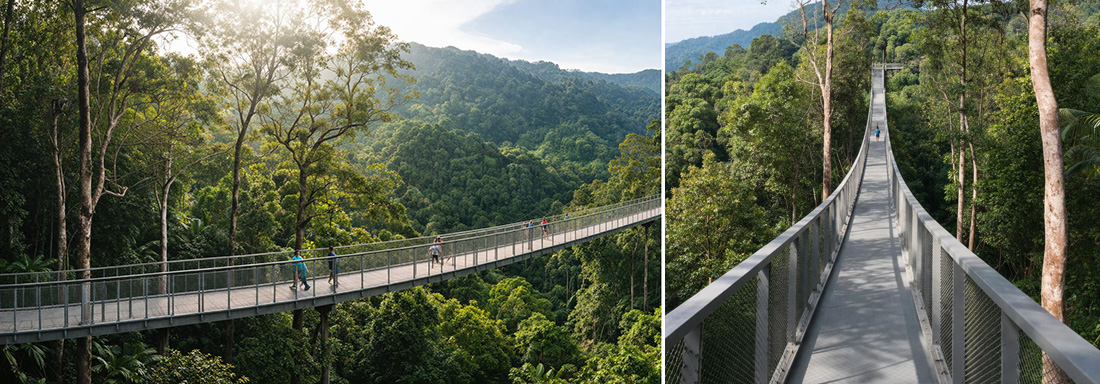
Langur Way Canopy Walk
One of the standout features is the Langur Way Canopy Walk, the world’s longest double-span stressed-ribbon bridge. Suspended high above the forest floor, it offers a breathtaking vantage point across the rainforest canopy. As you walk across, the combination of engineering elegance and natural beauty creates a memorable experience unlike any other in Malaysia.
One of the longest canopy bridges in the world
-
- The Langur Way Canopy Walk stretches about 230 metres across a deep valley.
- It is often cited as one of the longest two-span stressed ribbon bridges globally.
- Unlike traditional suspension bridges, it uses a stressed ribbon design, which keeps the walkway stable and relatively gentle in movement.
Walk above a 130-million-year-old rainforest
-
- The bridge sits within a primary rainforest ecosystem, estimated to be over 100 million years old—older than the Amazon.
- Visitors walk at canopy level, offering a rare perspective usually reserved for wildlife.
Named after the dusky leaf monkeys
-
- “Langur Way” refers to the dusky leaf monkey, scientifically known as Trachypithecus obscurus.
- These monkeys are frequently seen near the canopy, especially in the early morning or late afternoon.
- It highlights the park’s focus on coexistence with native wildlife.
Unique panoramic viewpoints
-
- From the bridge, visitors can enjoy:
- Sweeping views of Penang Hill forest reserve
- On clear days, distant views of the coastline
- The experience changes with the weather—misty mornings can create a “cloud forest” effect.
- From the bridge, visitors can enjoy:
Engineering adapted to nature
-
- The structure is designed with minimal ground impact:
- Few support points to reduce disturbance
- Elevated to allow wildlife movement below
- Built to withstand tropical conditions, including heavy rain and strong winds
- The structure is designed with minimal ground impact:
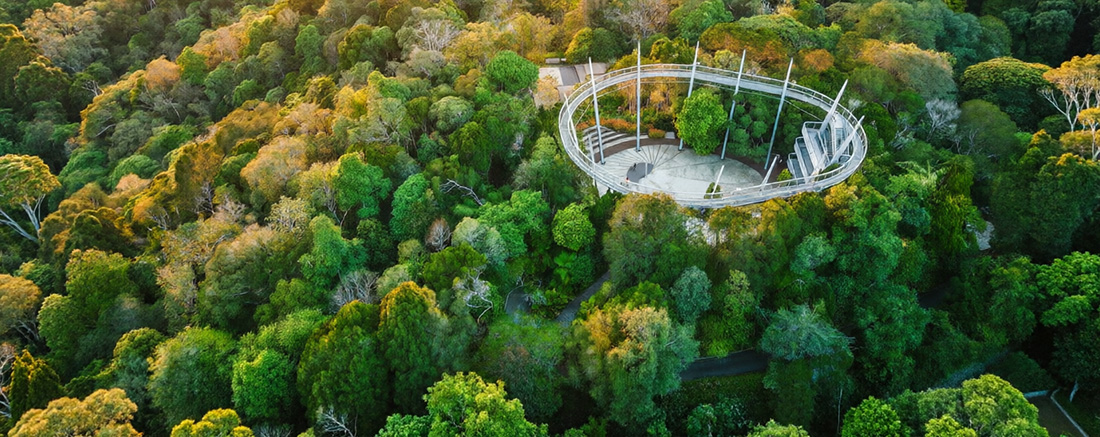
Curtis Crest Tree Top Walk
Equally impressive is the Curtis Crest Tree Top Walk, the highest publicly accessible viewing platform on Penang Island. From this elevated point, visitors can enjoy sweeping 360-degree views of the island, the mainland, and even distant archipelagos on a clear day. Sunrise and sunset are particularly spectacular, transforming the landscape into a vivid panorama of colours and light.
The highest accessible public viewpoint on Penang Island
Curtis Crest sits at approximately 800 metres above sea level, making it:
-
- The highest publicly accessible viewing platform on Penang Hill
- A vantage point offering 360-degree panoramic views
On a clear day, visitors can see:
-
- George Town and the mainland
- The Straits of Malacca
- Even parts of Kedah
360-degree circular design
Unlike typical straight canopy walks, Curtis Crest features a circular elevated platform:
-
- Allows uninterrupted viewing in all directions
- Designed to rise above the surrounding treetops, not just within them
- Creates a “floating above the forest” experience
Ancient rainforest setting
The walk is located within a 130-million-year-old rainforest, part of one of the oldest ecosystems in the world:
-
- Predates the Amazon and Congo rainforests
- Rich in endemic flora and fauna
This gives the site both scientific and ecological significance.
Low-impact engineering
The structure is carefully designed to:
-
- Minimise disturbance to the forest floor
- Be supported with limited ground contact points
- Blend visually with the natural environment
This aligns with The Habitat’s conservation-focused philosophy.
One of the best sunrise & sunset spots
Curtis Crest is particularly known for:
-
- Sunrise above the forest canopy (misty, layered hills)
- Sunset over the Straits of Malacca
The lighting conditions make it highly attractive for photography and videography.
Excellent for stargazing
Due to its elevation and reduced light pollution compared to the city:
-
- It is occasionally used for night experiences and stargazing sessions
- Offers a clearer view of the night sky than most parts of Penang Island
Part of a curated rainforest experience
The Tree Top Walk is not a standalone—it is integrated into a broader trail system within The Habitat:
-
- Connected via well-maintained forest paths
- Often combined with the Langur Way Canopy Walk for a full experience
Named after Charles Curtis
The site is named after Charles Curtis, a British botanist:
-
- Former superintendent of the Penang Botanic Gardens
- Contributed significantly to the study of Penang’s plant biodiversity
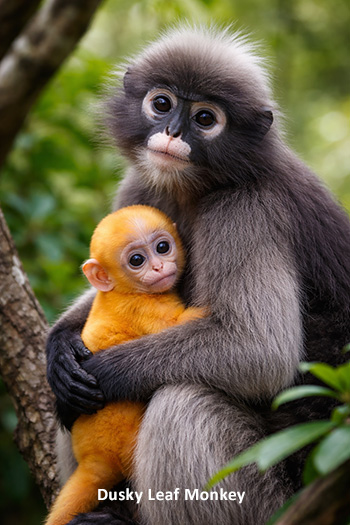
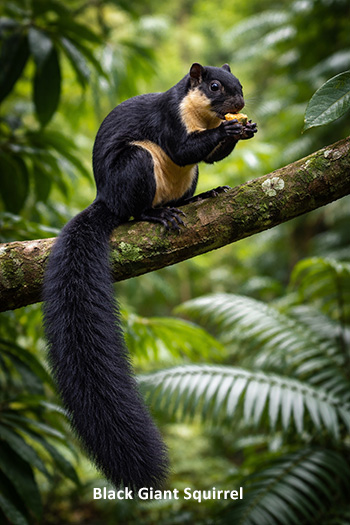
Penang Hill is not only a scenic retreat above George Town, but also a thriving ecological sanctuary where tropical rainforest species continue to flourish. Among its most fascinating wildlife are three distinctive creatures that reflect the richness and diversity of this hill’s natural environment: the dusky leaf monkey, the black giant squirrel, and the racket-tailed drongo. Each plays a unique role in the ecosystem, while offering visitors memorable encounters with Penang’s wild side.
Dusky Leaf Monkey (Spectacled Langur, “Lotong” in local Malay language)
The dusky leaf monkey, also known as the spectacled langur, is perhaps the most iconic mammal on Penang Hill. Easily recognized by the white rings around its eyes—resembling a pair of spectacles—this primate has a gentle, almost curious expression that endears it to observers.
These monkeys are primarily arboreal, spending most of their time in the forest canopy. Their diet consists mainly of young leaves, fruits, and flowers, making them important contributors to seed dispersal and forest regeneration. They are diurnal and highly social, living in groups of 5–20 individuals led by a dominant male. They are primarily folivorous, feeding on young leaves and shoots, which they efficiently digest thanks to specialized stomachs adapted for fermenting plant matter. They have multi-chambered stomachs with three main compartments, similar in principle to ruminants such as cows, but structurally simpler. The stomach is typically divided into the saccus (fermentation chamber), tubiform section, and glandular stomach (true stomach). Their multi-chambered stomach is supported by symbiotic microbes that break down cellulose and neutralize plant toxins (many of the leaves they eat are chemically defended). This allows them to exploit food sources that many other primates cannot. Because leaf digestion is energy-intensive, they spend long periods resting (slow metabolism strategy). Movement is relatively deliberate and energy-efficient. This is a classic adaptation seen in folivorous (leaf-eating) primates.
Unlike the more aggressive long-tailed macaques found in many urban areas, dusky leaf monkeys are generally shy and non-confrontational. Visitors often see them quietly foraging or resting in small family groups.
One particularly fascinating feature is that their infants are born with bright orange fur—a striking contrast to the adults’ grey and black coloration. After 5 months, the infants gradually change to the darker tones of maturity. This coloration signals “infant status” to the group. It encourages alloparenting (other females help carry and care for the baby).
Their presence on Penang Hill highlights the relatively undisturbed nature of the forest. However, like many primates in Southeast Asia, they face threats from habitat loss and human encroachment, making conservation awareness essential.
Key facts
-
-
Scientific name: Trachypithecus obscurus
-
Common names: Dusky Leaf Monkey, Spectacled Langur
-
Conservation status: Near Threatened (IUCN Red List)
-
Habitat: Tropical forests, mangroves, and coastal regions of Southeast Asia
-
Diet: Primarily leaves, with shoots, fruit, and flowers
-
Black Giant Squirrel (Ratufa Bicolor)
High in the treetops, often moving with remarkable agility, is the black giant squirrel—one of the largest squirrel species in the world. With a body length that can exceed 30 centimeters (excluding its long bushy tail), this impressive rodent is a true canopy specialist.
Its striking coloration, typically a combination of deep black and creamy beige, provides camouflage among the dappled light of the forest canopy. Despite its size, the black giant squirrel is surprisingly elusive. Visitors may first notice it through the rustling of branches or the sound of nutshells cracking open, rather than by sight.
This species feeds on fruits, seeds, bark, and occasionally insects. It plays an important ecological role by dispersing seeds and maintaining forest health. Unlike ground-dwelling squirrels, it rarely descends to the forest floor, relying instead on its powerful limbs and sharp claws to leap between branches—sometimes covering distances of several meters in a single bound.
Spotting a black giant squirrel on Penang Hill often requires patience and a keen eye, but the reward is witnessing one of the forest’s most impressive acrobats in action.
Key facts
-
-
Scientific name: Ratufa bicolor
-
Common name: Black giant squirrel
-
Average length: 85–100 cm, including the tail, one of the largest in the world.
- Life span: 10-12 years
-
Habitat: Tropical and subtropical forests of South and Southeast Asia, from eastern India and Nepal through Thailand, Malaysia, and Indonesia to parts of southern China.
-
Conservation status: Near Threatened (International Union for Conservation of Nature Red List, 2023)
-
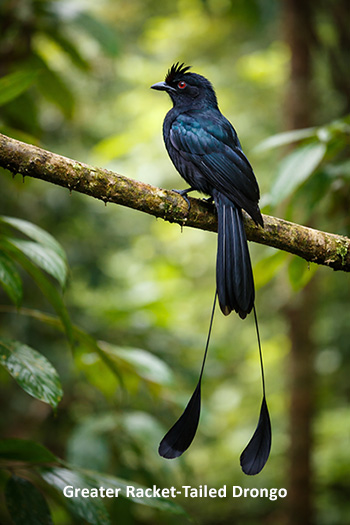
Greater Racket-Tailed Drongo (Dicrurus paradiseus)
Among the many bird species inhabiting Penang Hill, the greater racket-tailed drongo stands out for both its appearance and its remarkable vocal abilities. This glossy black bird is distinguished by its long tail feathers, which end in unique, racket-shaped tips, giving it an unmistakable silhouette in flight.
Despite being referred to here as a “blue” drongo, its plumage appears predominantly black with a subtle iridescent sheen that can reflect bluish tones under sunlight. It is often heard before it is seen, thanks to its extraordinary ability to mimic calls of other birds, sounds of mammals, including alarm calls, and even mechanical noises in some environments. This mimicry is not merely for show—it can serve as a clever survival strategy. By imitating alarm calls, the drongo may startle other animals into dropping food, which it then quickly snatches. This level of behavioral intelligence makes it one of the most intriguing birds in the region.
Greater Racket-Tailed Drongos often act as sentinel birds in mixed flocks: They give loud alarm calls when predators are nearby. Other species rely on them as an early warning system.
Its long tail ends in two bare shafts with distinctive racket-shaped tips. These are used in display and communication. They make the bird highly visible even in dense forests. Interestingly, the tail streamers can be longer than the body itself.
The drongo typically inhabits mid- to upper-forest levels. They are highly skilled at hawking insects in flight.
Breeding occurs mainly from March to June. Pairs construct small cup-shaped nests high in trees using twigs and spider silk. Both parents incubate 2–4 eggs and feed the chicks. Their diet includes flying insects, small vertebrates, fruits, and nectar, making them integral to forest food webs.
Key facts
-
-
Scientific name: Dicrurus paradiseus
-
Family: Dicruridae
-
Length: 31–35 cm; tail streamers add up to 25–30 cm
-
IUCN status: Least Concern (2025)
-
Distribution: Indian subcontinent to southern China and Indonesia
-
A Living Rainforest Experience
Together, these three species illustrate the ecological richness of Penang Hill. From the gentle, leaf-eating primates to the agile canopy squirrels and the intelligent, vocal birds, each contributes to the balance of this rainforest ecosystem.
For visitors, encountering these animals in their natural habitat offers more than just a sightseeing experience—it provides a deeper appreciation of Penang’s biodiversity and the importance of preserving it. Early mornings and late afternoons are often the best times for wildlife observation, when the forest is alive with movement and sound.
As development continues across much of Southeast Asia, places like Penang Hill remain vital refuges for wildlife. Protecting these habitats ensures that future generations will continue to witness the quiet grace of the dusky leaf monkey, the acrobatics of the black giant squirrel, and the captivating calls of the racket-tailed drongo.
Operating Hours and Ticket Prices
The Habitat Penang Hill is open daily, generally from 9:00 AM to 5:30 PM, with visitors allowed to remain in the park until around 7:00 PM.
Some sources also indicate extended hours up to 9:00 PM, particularly for special evening experiences, with last entry typically between 5:30 PM and 6:30 PM.
Standard admission ticket prices are as follows:
-
Adult: RM60
-
Child (4–12 years): RM40
-
Senior (60+): RM40
-
Family package (2 adults + 2 children): RM160
Children under 4 usually enjoy free entry, while optional add-ons, such as the evening “Sunset Walk,” may require an additional fee.
A Complete Experience
Getting to The Habitat is an experience in itself. Most visitors take the iconic Penang Hill funicular train, which ascends through dense forest while offering scenic views along the way. Upon reaching the summit, a short walk leads to the entrance of this remarkable rainforest sanctuary.
In today’s fast-paced world, destinations like The Habitat Penang Hill provide something increasingly rare—a chance to slow down, breathe deeply, and reconnect with nature. Whether you are a nature enthusiast, a photographer, or simply a traveller seeking a meaningful escape, this hidden gem offers an unforgettable journey into the heart of Malaysia’s natural heritage.
A visit to The Habitat Penang Hill is not just a sightseeing trip—it is an investment in experience, education, and conservation.


