



Penang, Malaysia, is a treasure trove of traditional commerce, and its heritage dried seafood markets are a sensory journey into the heart of Hokkien and Cantonese culinary traditions. These shops, often found along the historic streets of Georgetown, offer a curated selection of “ocean umami” and tonic ingredients. These products are more than just food; they are essential components of festive banquets and the foundation of nourishing home-cooked soups.
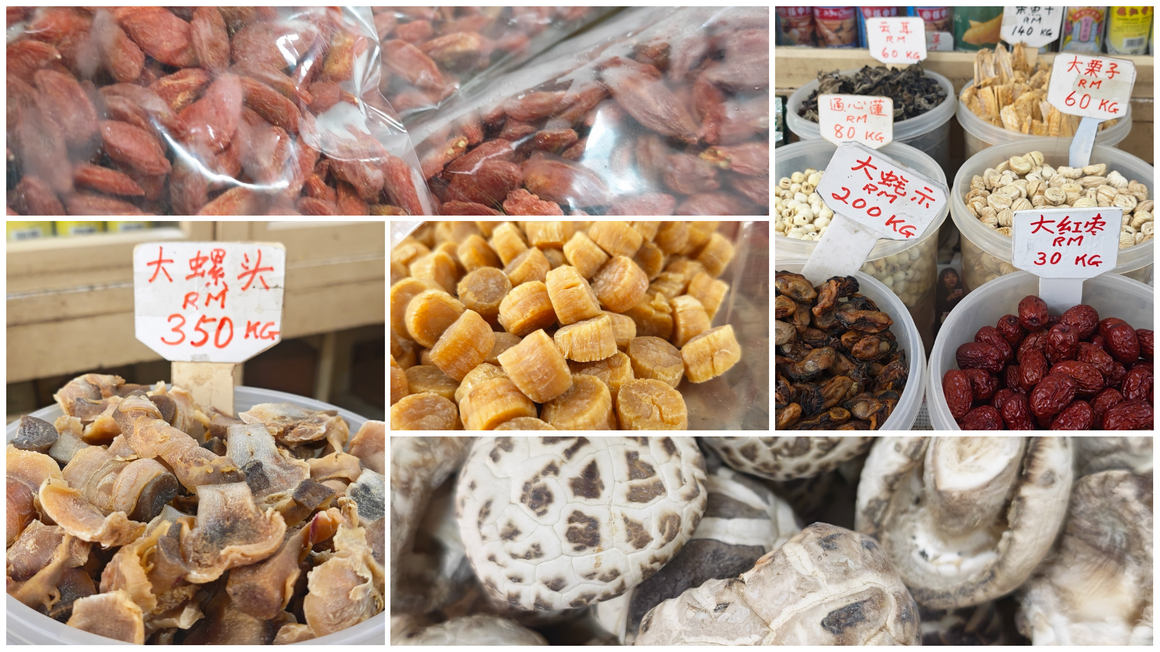
Here is a guide to the items found in your images, including their traditional Chinese names and typical uses.
Premium Dried Seafood & Proteins
• Sea Snail / Conch Head (大螺头 - Dà Luó Tóu): Often priced higher due to its meaty texture, dried conch is a powerhouse for “cooling” soups. It is commonly used in double-boiled soups, especially those intended for nourishment and recovery.
Dried sea snail has a firm, slightly chewy texture after rehydration and, in traditional Chinese dietary therapy, is believed to support the kidneys and overall vitality. Its relatively high price reflects both its labor-intensive processing and its perceived health benefits.
• Dried Scallops (干贝 / 江瑶柱 - Gānbèi):
Commonly known as Conpoy, these small, golden discs are made from the adductor muscle of scallops, which are cooked and then dried to preserve their flavour. Conpoy is highly valued for its intense umami taste, derived from natural amino acids such as glutamate.
In Penang, dried scallops are considered a premium ingredient, often used in dishes like congee, soups, fried rice, and sauces. Even a small amount can significantly enhance flavour, making it a cost-effective luxury. High-grade conpoy is typically larger, lighter in colour, and more fragrant. The price can vary widely depending on origin, with Japanese varieties often commanding higher prices.
These highly concentrated nuggets of umami are used to flavor congee, XO sauce, or festive “Pen Cai” (braised layers of seafood).
• Fish Maw (花胶 - Huā Jiāo): It is the dried swim bladder of certain fish, highly valued in Chinese cuisine and traditional dietary culture. It is considered a premium ingredient, often grouped alongside delicacies such as abalone and sea cucumber.
The swim bladder is an internal organ that helps fish maintain buoyancy. After harvesting, it is cleaned, inflated, and dried, resulting in a hard, lightweight product that can be stored for long periods. Before cooking, fish maw must be soaked and rehydrated, during which it expands significantly and becomes soft and gelatinous.
Culinarily, fish maw is prized not for its strong flavour, but for its unique texture. When properly prepared, it has a smooth, slightly chewy, and sponge-like consistency that absorbs the flavours of surrounding ingredients. It is commonly used in soups, braised dishes, and festive stews, especially in Cantonese cuisine.
From a nutritional standpoint, fish maw is rich in collagen and protein, which is why it is often associated with skin health and general nourishment. In traditional Chinese dietary beliefs, it is considered beneficial for strengthening the body, improving recovery, and supporting overall vitality. However, these benefits are largely based on traditional perspectives rather than strict clinical evidence.
The value of fish maw varies widely depending on the fish species, size, thickness, and origin. Larger, thicker pieces from wild-caught fish are significantly more expensive and are often reserved for banquets or special occasions such as weddings and Chinese New Year.
• Chinese Sausage (腊肠 - Làcháng): It is a traditional preserved meat product widely used in Chinese cuisine. It is typically made from pork, pork fat, sugar, soy sauce, and rice wine, then stuffed into natural casings and air-dried or cured. The result is a firm, slightly translucent sausage with a distinctive sweet–savory flavour.
There are two main types: southern-style, which is sweeter and more common in Malaysia and southern China, and northern-style, which is saltier and firmer. Some variations include liver sausage (润肠) or duck-based versions.
Chinese sausage is not eaten raw; it is usually sliced and cooked. Common methods include steaming, stir-frying, or adding it to rice dishes such as claypot rice or fried rice. During cooking, the fat melts, infusing the dish with a rich aroma and umami.
• Dried Oysters (蚝豉 - Háo Chǐ): In Cantonese culture, these are a must-have for the Lunar New Year because their name sounds like “good business” or “good fortune.”
Medicinal Herbs & Dried Fruits
• Shiitake Mushrooms (花菇 - Huā Gū): Known as “Flower Mushrooms” because of the beautiful cracked pattern on their caps. These are the highest grade of dried shiitake, valued for their thick, meaty flesh.
• Goji Berries (枸杞子 - Gǒuqǐzǐ): These bright red berries, derived mainly from the plant Lycium barbarum, are small red dried fruits widely used in Chinese cuisine and traditional herbal practice. They have a mildly sweet, slightly earthy flavour and are commonly added to soups, teas, and desserts.
Nutritionally, goji berries are rich in antioxidants—especially zeaxanthin—along with vitamin C, fibre, and essential amino acids. In traditional use, they are associated with supporting eye health, improving vitality, and nourishing the liver and kidneys.
In Penang and across Malaysia, goji berries are often combined with red dates and other herbs in slow-cooked soups. They can also be eaten directly as a snack after rinsing, offering a convenient and nutritious addition to the daily diet.
• Red Dates (大红枣 - Dà Hóng Zǎo): A natural sweetener for soups and herbal teas. They are often paired with goji berries to “replenish blood” and balance the “qi.”
• Dried Longan (桂圆干 - Guìyuán Gān): It comes from the fruit of the Dimocarpus longan, commonly grown in Southeast Asia. Fresh longan is peeled and sun-dried until the flesh turns dark brown and chewy, concentrating its natural sugars. It has a sweet, caramel-like flavour and is widely used in Chinese cuisine and herbal soups. In traditional Chinese Medicine, dried longan is believed to nourish the blood, improve circulation, and promote relaxation. It is often combined with red dates or lotus seeds in desserts and tonics, making it both a culinary ingredient and a functional food valued for its warming properties. These smoky, sweet dried fruits are used in desserts like Cheng Tng or boiled as a tea to help with insomnia and relaxation.
• Dried Lychee (荔枝干 - Lìzhī Gān): Less common than longan, these offer a more floral sweetness and are often enjoyed as a snack or used in specialized herbal infusions.
Seeds, Nuts & Roots
• Lily Bulbs (百合 - Bǎi Hé): These cream-colored petals are used in both savory soups and sweet dessert soups (tong sui). They are traditionally used to moisten the lungs and calm the nerves.
• Lotus Seeds (莲子 - Lián Zǐ): They come from the seed pod of the Nelumbo nucifera and are widely used in Chinese cuisine and traditional herbal cooking. They are also often found in the center of mooncakes. They are typically sold dried and must be soaked before use. Lotus seeds have a mild, slightly sweet taste and a soft, starchy texture when cooked. They are commonly added to soups, desserts, and herbal broths. In traditional Chinese dietary practice, lotus seeds are valued for supporting digestion, improving sleep, and nourishing the body. They are especially popular in sweet soups and festive dishes due to their symbolic association with harmony and fertility.
• Melon Seeds (瓜子 - Guā Zǐ): Specifically, the black-rimmed seeds and white pumpkin seeds seen in the images. These are a classic “leisure snack,” cracked open during tea time or family gatherings.
• Dried Chestnuts (大栗子 - Dà Lì Zǐ): Once rehydrated, these become sweet and nutty, making them a favorite addition to zongzi (sticky rice dumplings) and braised chicken dishes.
A Note on Pricing
The prices shown (RM or Ringgit Malaysia) are typically quoted per kilogram (KG). In Penang’s markets, you’ll notice a vast range—from RM 30 for basic red dates to over RM 1,200 for high-grade fish maw—reflecting the rarity and “grade” of these traditional delicacies.


