



The arowana is one of the most iconic and valuable freshwater fish in the world, often referred to as the “dragon fish” due to its elongated body, metallic scales, and barbels that resemble whiskers. Found across Asia, South America, Africa, and Australia, arowanas belong to an ancient group of fish that dates back to the age of dinosaurs. Beyond their biological significance, they have become a cultural symbol of wealth, prosperity, and status—especially in East and Southeast Asia.
The World’s Most Expensive Arowanas
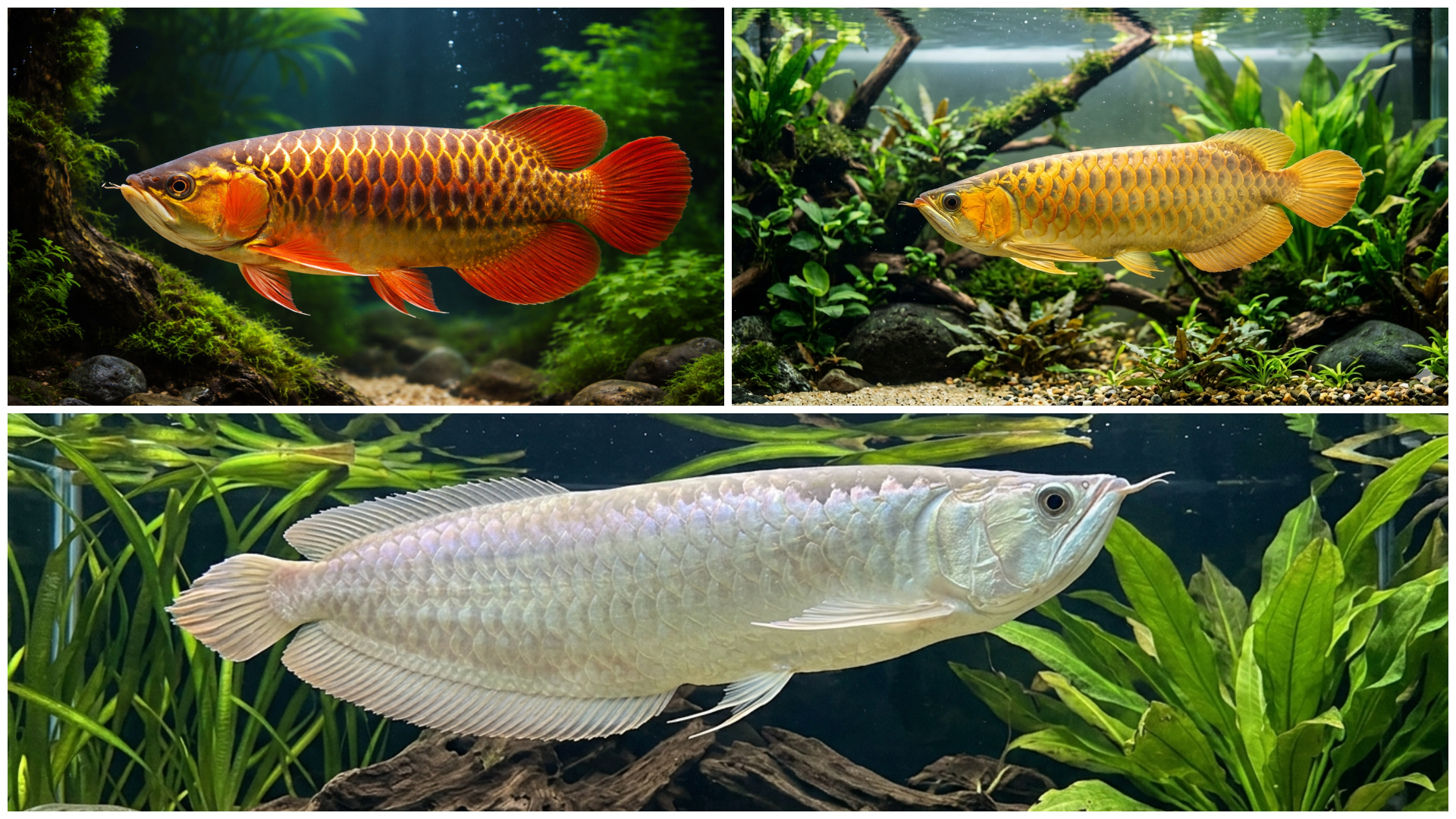
Among all ornamental fish, arowanas consistently rank at the top in terms of price. The most expensive specimens ever recorded are typically Platinum Arowanas, a rare genetic mutation characterized by a pure white or silvery body with no pigmentation.
Some notable records include:
-
A platinum arowana in Singapore, reportedly valued at over US$400,000
-
Another specimen in Singapore offered for more than £200,000 (over US$250,000)
-
General reports of high-end arowanas exceeding US$100,000–300,000
These prices place arowanas in the same category as luxury assets such as sports cars or fine art. Even non-platinum varieties—like Super Red or Crossback Golden—can easily reach tens of thousands of dollars when of top quality.
Why Are Arowanas So Expensive?
The extraordinary price of arowanas is driven by a combination of biological, cultural, and economic factors.
1. Extreme Rarity
Platinum arowanas are not a separate species but a genetic mutation that occurs extremely rarely in nature. This scarcity alone dramatically increases their value.
2. Cultural Significance
In Chinese culture, the arowana resembles a dragon, symbolizing wealth, power, and good fortune. This belief fuels strong demand among collectors and business owners.
3. Legal Restrictions
The Asian arowana (Scleropages formosus) is listed under CITES Appendix I, meaning international trade is strictly regulated.
Only licensed farms in countries such as Malaysia, Singapore, and Indonesia can legally breed and sell them, thereby limiting supply.
4. Selective Breeding
High-end arowanas are selectively bred over generations to enhance desirable traits such as color intensity and scale pattern. This process is time-consuming and expensive.
5. Low Reproductive Yield
Arowanas produce relatively few offspring per breeding cycle, further restricting availability.
How to Determine a High-Value Arowana
In the commercial aquarium trade, several criteria are used to evaluate the quality and price of an arowana.
1. Color and Coverage
-
Rich, vibrant colors (deep red, metallic gold) are highly prized.
-
Full-body color coverage increases value significantly
2. Scale Quality
-
Large, uniform scales with a strong shine
-
In Crossback Golden arowanas, the gold must “cross” over the back
3. Body Shape and Proportion
-
A long, straight body with balanced fins
-
Symmetry is essential for high-grade specimens
4. Absence of Defects
-
No scars, deformities, or “droopy eye” condition
-
Physical imperfections can drastically reduce the price
5. Movement and Behavior
-
Smooth, confident swimming
-
Alert and responsive personality
6. Age and Development
Young fish are cheaper, but their future color development is uncertain. Mature fish command higher prices because their traits are already visible.
Breeding Process in Nature
Arowana reproduction is biologically fascinating and quite different from many other fish species.
Courtship and Spawning
-
Mature fish pair up in slow-moving rivers or flooded forests.
-
The female lays eggs, which the male immediately fertilizes
Mouthbrooding Behavior
The most distinctive feature is paternal mouthbrooding:
-
The male collects the fertilized eggs into his mouth.
-
He carries them for 50–60 days without feeding.
-
After hatching, the fry remain in the male’s mouth until they are strong enough to swim independently.
This behavior significantly reduces predation but also limits the number of offspring produced.
Habitat Conditions
In the wild, arowanas inhabit:
-
Slow-moving rivers
-
Flooded forests
-
Lakes and wetlands
Other Interesting Facts About Arowana
1. Living Fossils
Arowanas are considered ancient fish, with evolutionary origins tracing back to the Jurassic period.
2. Exceptional Jumpers
They can leap several feet out of the water to catch prey. This is why aquarium tanks must have secure lids.
3. Large Size
Some species, such as the Silver Arowana, can grow up to 3–4 feet (90–120 cm) in length.
4. Solitary Nature
Arowanas are territorial and predatory. They are usually kept alone in aquariums because they will eat smaller tankmates.
5. Microchipping and Certification
Due to legal restrictions, many Asian arowanas are sold with:
-
Microchips
-
Certificates of origin
This system helps prevent illegal trade and ensures authenticity.
6. Arowana Competitions
In countries like Malaysia and Singapore, arowanas are judged in competitions similar to dog shows, where appearance, color, and posture are evaluated.
7. Investment Asset
High-quality arowanas are sometimes treated as investment assets, with owners expecting their value to appreciate over time.
Conclusion
The arowana is far more than just an aquarium fish—it is a convergence of biology, culture, and economics. Its ancient lineage, unique breeding behavior, and striking appearance make it one of the most fascinating freshwater species. At the same time, rarity, legal protection, and cultural symbolism elevate it into the realm of luxury collectibles.
From the legendary Platinum Arowana worth hundreds of thousands of dollars to carefully bred Super Reds and Golden Crossbacks, the arowana industry continues to thrive across Asia and beyond. Understanding how these fish are valued—through color, structure, and lineage—reveals why they remain the undisputed “king” of ornamental freshwater fish.
Contact Lawrence Blue, a licensed Malaysian tour guide, to bring you to places of interest in Perak.


